
What to Prepare Before Starting AI Vertical Drama Production
Turn a creative idea into an executable production brief by defining the story, characters, visual direction, delivery specifications, rights, and acceptance rules.
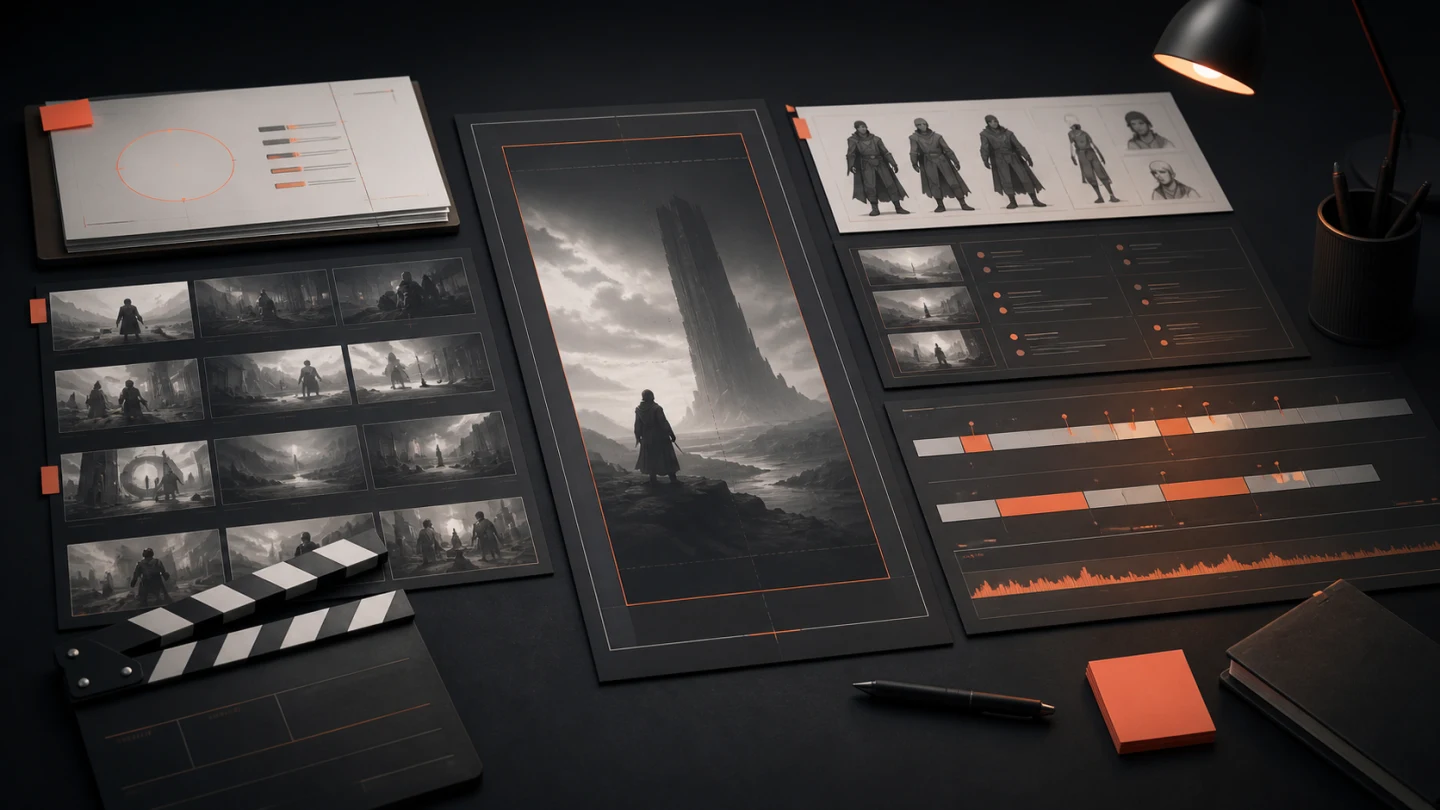
A useful production brief is not a long creative deck. It is a compact decision record that helps the client and production team agree on what will be made, what must remain consistent, and how the result will be reviewed.
For AI vertical drama, that clarity matters early. Character identity, visual style, episode rhythm, voice, delivery specifications, and material rights all affect the workflow. When these decisions are missing, a team may produce attractive individual shots that still fail to become a coherent episode.
1. State the production objective
Start with the business and audience context, not a list of visual effects. Explain where the series will be used, who it is for, and what the first production milestone needs to prove.
Useful inputs include:
- target market and audience
- intended distribution channel
- planned episode count and approximate duration
- target language or languages
- the decision the first pilot episode should support
Do not turn forecasted views, conversion, or platform approval into production acceptance criteria. Those outcomes depend on distribution and market factors outside the finished master.
2. Choose the format and visual target
Confirm whether the project is an AI anime drama or an AI live-action drama. Then provide two or three visual references and explain what should be learned from each one: lighting, camera language, costume, color, pacing, or emotional tone.
References are direction, not permission to copy protected characters or distinctive scenes. The brief should also name what to avoid, such as glossy advertising imagery, exaggerated fantasy effects, or a specific type of facial treatment.
3. Provide the story in usable units
A full screenplay is ideal, but an outline can be enough for an initial scope review if it clearly identifies:
- the premise and central conflict
- the main characters and their relationships
- the season arc
- the purpose and cliffhanger of each episode
- essential dialogue, props, and locations
Mark any element that cannot be changed. Separating fixed story facts from flexible production choices prevents unnecessary rewrites later.
4. Lock the character information
Character consistency needs more than a name and one portrait. For every recurring character, define age range, facial features, hair, wardrobe, silhouette, temperament, and any object that must persist across scenes.
If a character changes over the season, describe the change deliberately. A damaged costume, new hairstyle, or emotional shift should be part of continuity rather than accidental drift.
5. Describe the episode rhythm and delivery format
For each episode, identify the opening hook, key reveal, emotional turn, and end beat. Also specify the practical delivery requirements: vertical aspect ratio, resolution, frame rate, subtitle treatment, audio layout, file format, and naming convention.
These details affect shot design and editing. They should be decided before final rendering, not added as a last-minute export request.
6. Confirm voice and language requirements
List the dialogue language, subtitle language, preferred voice characteristics, pronunciation notes, and any words that must remain in the original language. If multiple markets are planned, state whether each version needs only translated subtitles or a separately reviewed voice performance.
7. Record rights and material provenance
List who owns or controls the script, character references, music, fonts, logos, voices, and any third-party materials supplied with the project. Flag materials that are reference-only and must not appear in the finished work.
The project scope should confirm usage rights and handoff rules in writing before production. A reference link alone is not evidence that an asset can be copied, adapted, or distributed.
8. Write the acceptance and revision rules
Define who can approve the work, which checkpoints require approval, how feedback will be consolidated, and what counts as a change of direction. Good checkpoints usually separate story, character and style, pilot episode, and final delivery review.
Feedback should point to a scene, frame, line, or specification. “Make it more premium” is a direction; “reduce the warm fill light in scene 04 and keep the approved face shape” is an actionable production note.
A minimum brief checklist
Before submitting a project, prepare:
- project objective and target audience
- AI anime or AI live-action format
- story outline or script
- main-character and continuity information
- visual references plus an avoid list
- episode count, duration, and language
- delivery specifications
- material-rights notes
- reviewers and acceptance rules
The brief does not need to solve every creative question. It needs to make the next decision visible. After the initial review, the production team can identify missing inputs, confirm scope, and decide whether to proceed to a bounded pilot.
Start a project review
If these inputs are ready, submit a project brief. To understand the production scope first, return to the DramaTake home page.